



Intelligent Priority Control Unit for Multi-Energy Complementarity Systems
In composite heating systems incorporating solar energy, heat pumps, and auxiliary heat sources (gas/electricity), the core control logic hinges on Source Priority Management.
The primary engineering challenge facing the industry lies in achieving a seamless transition between free heat sources and auxiliary heat sources without external intervention, thereby maximizing the System Energy Efficiency Ratio and reducing the complexity of the electrical control system.
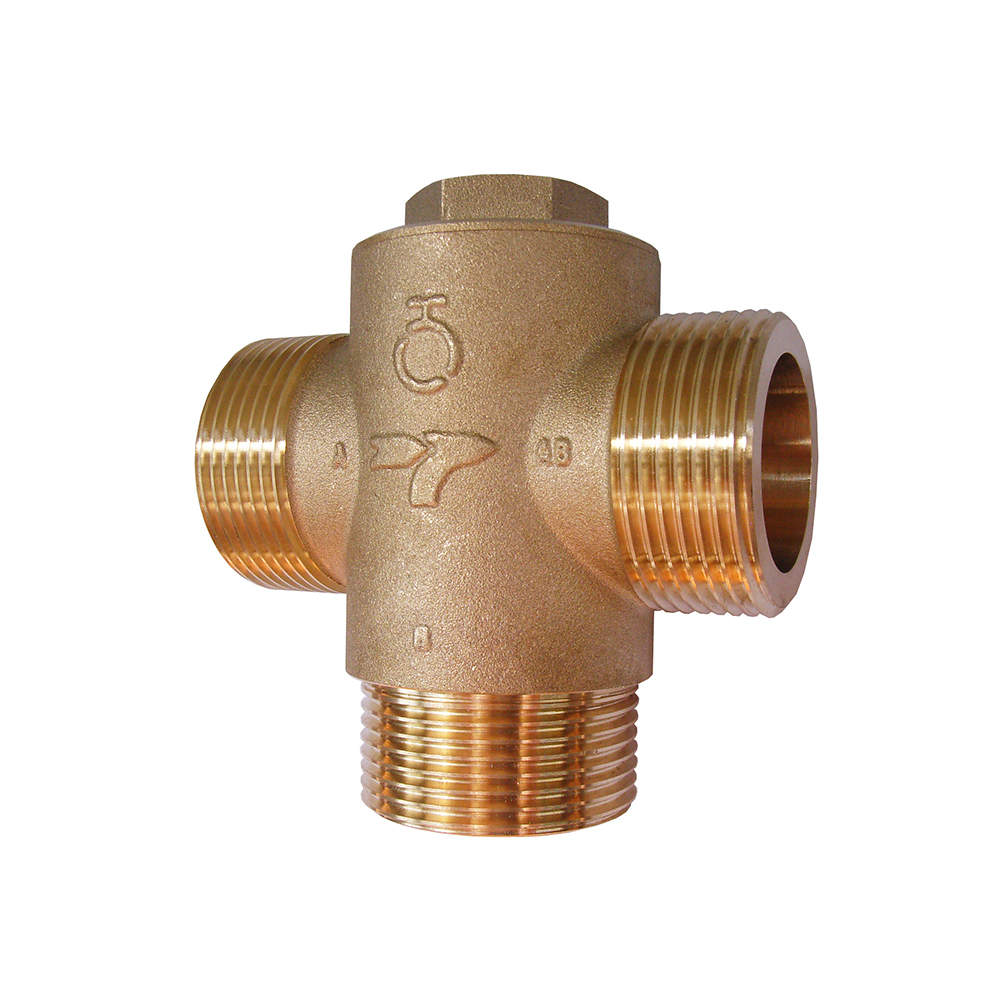
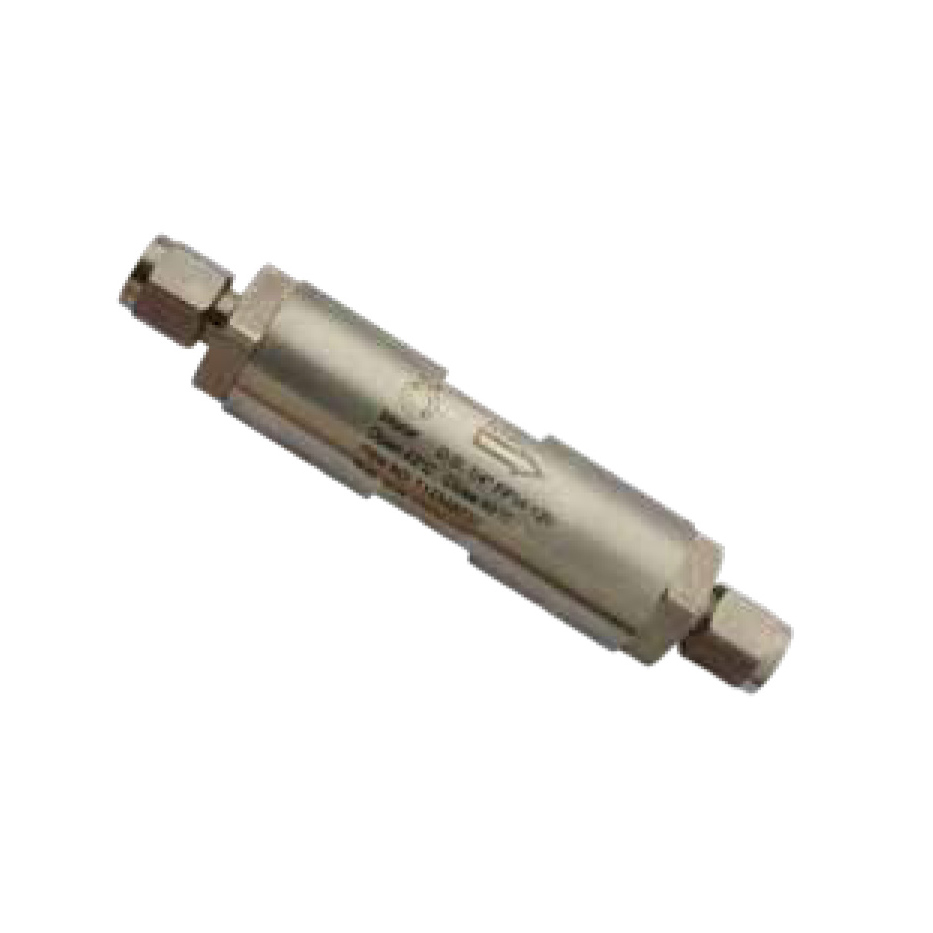
Winning™ MD Series Thermostatic Diverter Valve — A Physics-Based Heat Source Allocator
The MD Series is a purely mechanical three-way diverter valve. It operates independently of external power or electronic sensors, utilizing the thermodynamic properties of its built-in thermal element to directly actuate the valve core. This mechanism automatically switches fluid pathways in response to medium temperature.
Working Principle
- Condition A: Primary Heat Source Satisfies Demand (T ≥ Tset)
- Fluid Path: Auxiliary heat source inlet is shut off; direct supply outlet is open.
- System Behavior: High-temperature medium flows directly to the load end. The auxiliary heat source equipment shuts down, achieving zero-energy operation.
- Condition B: Primary Heat Source Insufficient (T < Tset)
- Fluid Path: Direct supply outlet is shut off; auxiliary heat source loop is open.
- System Behavior: The medium is forced through the auxiliary heating equipment for supplemental heating, ensuring a constant water temperature at the load end.
Core Application Scenarios: Coupling Renewable and Traditional Energy
- Domestic Hot Water / Commercial Building HVAC Integration:
- Suitable for mixing and switching control in parallel heat pump and boiler systems.
- Solar Inter-seasonal Thermal Storage Systems:
- Used for temperature stratification control between the collector end and the storage end.
- Industrial Waste Heat Recovery Systems:
- Performs automatic distribution between heat sources of different temperature gradients.

The text you provided describes the operational logic and key selling points of the thermostatic valve in a hybrid heating system. Here is a professional English translation tailored for technical documentation or a product brochure.
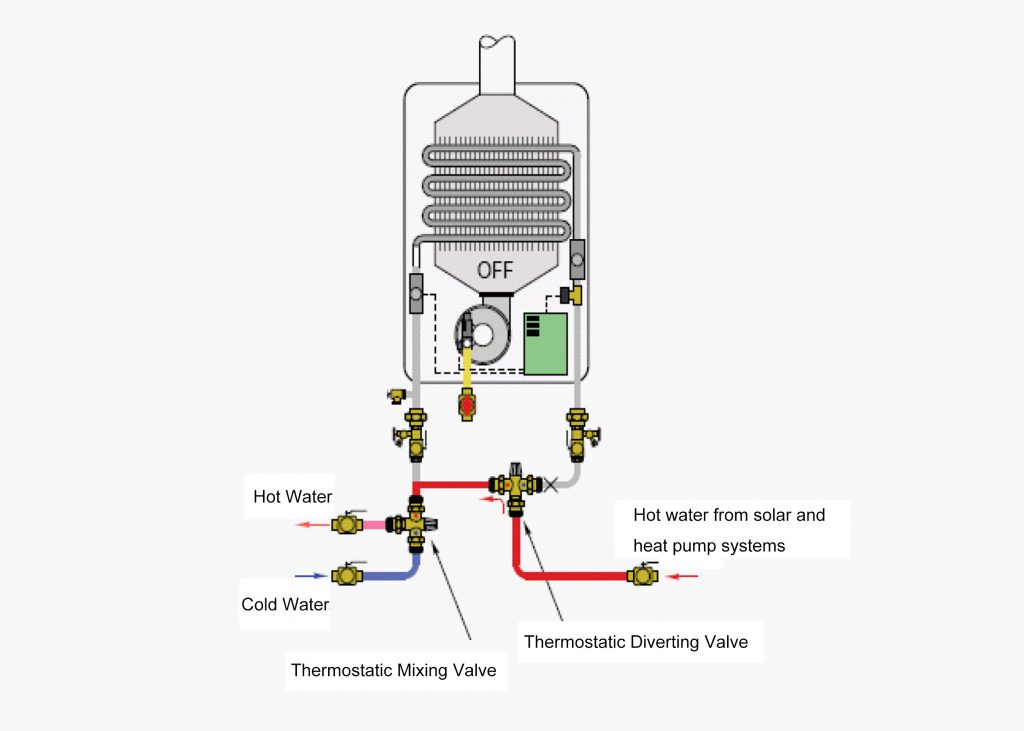
Schematic Description
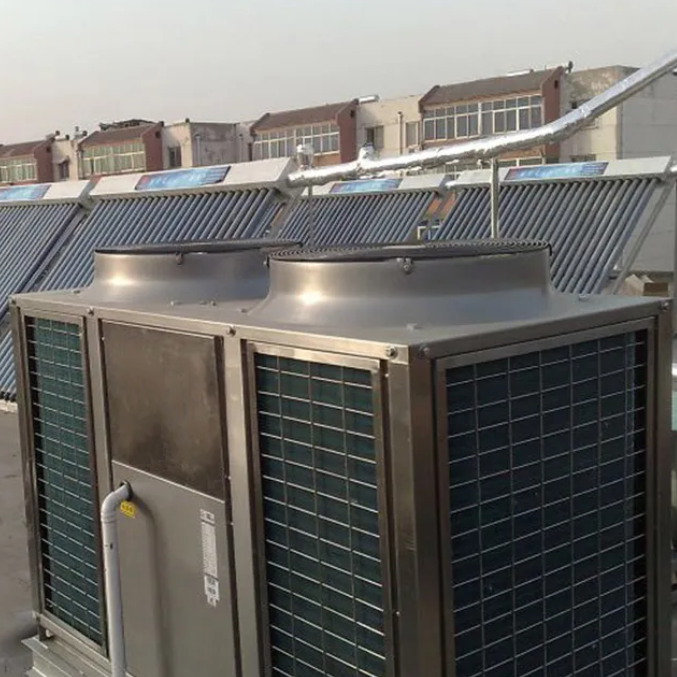
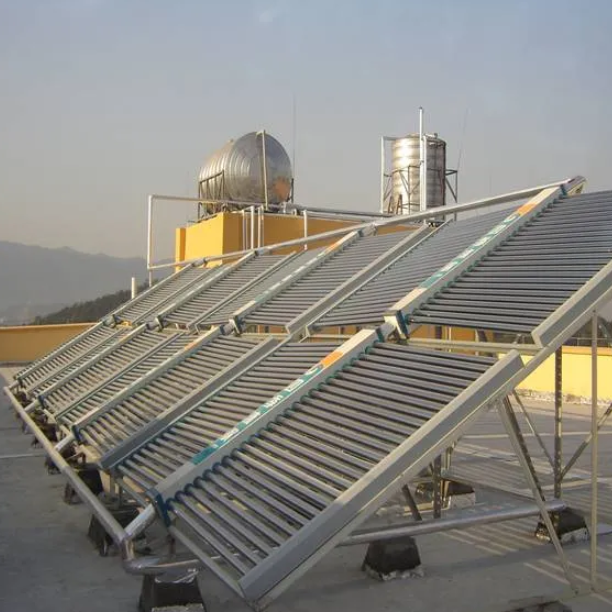
The diagram above illustrates the diverting and mixing applications involving solar collectors or air-source heat pumps integrated with an auxiliary heat source.
- High-Temperature Mode: When the inlet temperature from the solar or air-source system exceeds the setpoint of the thermostatic diverter valve, hot water bypasses the auxiliary heater and is supplied directly to the user.
- Low-Temperature Mode: When the inlet temperature from the solar or air-source system falls below the valve’s setpoint, the water is routed through the auxiliary heat source for reheating before being supplied to the user.
Product Advantages
Optimized Operation & Maintenance Costs
Utilizing a purely mechanical, self-acting actuation principle, this valve completely eliminates the dependency on PLCs, external sensors, and power supplies. It is ideally suited for harsh outdoor environments and unattended plant rooms, offering exceptional long-term reliability.
Energy Management Logic
The valve features an embedded physical algorithm that executes a “Free Heat Source Priority” strategy. When the primary heat source (e.g., solar) reaches the set threshold, the auxiliary loop is automatically isolated; conversely, it opens when temperatures are insufficient. This logic ensures auxiliary energy is engaged only when necessary, maximizing overall system efficiency.
Fluid Isolation Performance
The balanced valve core design ensures that the two outlets remain mutually isolated during the diverting process. This prevents backflow of high-temperature media or short-circuiting between hot and cold streams, safeguarding the independence and safety of each heat source subsystem (DN15 models can be customized with an internal check valve core).
Technical Specifications
| Parameter | Specification |
|---|---|
| Model Number | DN15MD45/37, DN20MD45/37 |
| Valve Body Material | Brass |
| Control Accuracy | ±2°C |
| Temperature Setting | 45°C or 37°C (Standard) |
| Max. Working Pressure | 1.0 MPa |
| Max. Working Temperature | 95°C |
| Flow Coefficient (Cv) | 1.5 |
Beijing Winning Thermo Control Equipment Co., Ltd. provides customized engineering solutions based on fluid control. Click the button below to download the detailed technical manual or contact our engineers for selection based on special temperature points.