
Process Analysis Systems — Non-Electric, High-Temperature Safety Shut-off Solution
Precision Instrument Protection Under Cooling Failure Conditions
In process analysis systems within the petrochemical, chemical, and power industries, process media are typically in a high-temperature and high-pressure state. To protect expensive downstream on-line analyzers (such as chromatographs and infrared analyzers), sample coolers must be configured within the sampling conditioning unit. However, in the event of cooling medium supply interruption (e.g., cooling water failure), cooler blockage, or abnormal ambient temperatures, the sample temperature will spike instantly, exceeding the analyzer’s tolerance limits. Traditional temperature control systems relying on electricity or external signals may fail precisely when power is lost or faults occur. Wenning™ has developed and manufactured a purely mechanical high-temperature blocking valve based on physical principles.
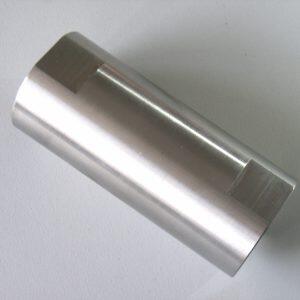
FP17 High-Temperature Sample Safety Shut-off Valve
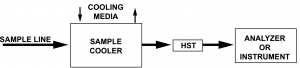
The FP17 is a normally-open, self-acting high-temperature safety shut-off valve (High Sample Temperature Valve, HST). It is installed in series after the sample cooler and directly senses the sample fluid temperature, requiring no external power source or control signal.
Core Safety Logic
Instantaneous Over-Temperature Shut-off
When the sample temperature is detected to exceed the preset threshold (e.g., 45°C), the internal thermal element expands rapidly, actuating the plunger-style valve core to achieve positive shut-off with zero leakage. This physically isolates the high-temperature fluid, preventing it from entering the analyzer.
Automatic Reset and Recovery
Distinct from one-time fuse devices, the FP17 features memory and recovery capabilities. When the fault is cleared and the valve body temperature cools below the setpoint, the valve automatically resets to the open position. The system can resume normal sampling processes without manual intervention, reducing operation and maintenance downtime.
Independent Protection Layer
As a purely mechanical device, its actuation is completely independent of electrical control systems (PLC/DCS). Even in the event of power failure, air supply loss, or control signal loss, it can still execute safety shut-off functions based on physical laws (thermal expansion and contraction), complying with the requirements for Independent Protection Layers in functional safety standards (IEC 61508/SIL).
Applicable Fields & Scenarios
Core Application Scenarios: Protection for Process Analyzers (PA) and Gas Chromatographs (GC).
Petrochemical Industry
Reactor outlet analysis in refineries and ethylene plants, preventing high-temperature catalysts or reaction heat from damaging chromatography columns.
Fine Chemicals & Pharmaceuticals
Monitoring of reactor off-gas, preventing high-temperature gas backflow caused by cooling system failures.
Power Industry
Hydrogen purity analysis for hydrogen-cooled generators, preventing high-temperature hydrogen from damaging sensors.
Air Separation & Gas Manufacturing
Protection for impurity monitoring during the high-purity gas production process.
Technical Specifications
| Parameter | FP17-120 |
|---|---|
| Model Number | FP17-120 |
| Operating Mode | Normally Open, Close on Over-Temperature |
| Temperature Setting | 100°F, 105°F, 115°F, 130°F, 140°F or Customized |
| Valve Body Material | 316 Stainless Steel |
| Max. Pressure | 20 MPa |
| Max. Temperature | 120°C |
| Flow Coefficient (Cv) | 0.07 |
| Connection Type | NPTF 1/2″ |
| Net Weight | 0.5 kg |
Engineering Logic: Physical Response Mechanism
Condition A: Normal Operation (T < Tset)
- Status: The sample temperature is 30°C after passing through the cooler, which is below the valve setpoint (e.g., 45°C).
- Action: The thermal element remains in a contracted state; spring force or gravity maintains the valve core in the open position.
- Result: Sample fluid passes smoothly through the valve to enter the analyzer for detection.
Condition B: Cooling Failure (T ≥ Tset)
- Status: Cooling water supply stops, causing the sample temperature to spike instantly to 80°C.
- Action: The internal thermal medium within the valve expands rapidly. The generated thrust overcomes the spring force, driving the plunger-style valve core downward to cut off the flow path.
- Result: High-temperature fluid is physically isolated at the valve inlet, protecting the analyzer.
Condition C: Fault Recovery (T < Tset)
- Status: The cooling system is repaired, and the pipeline temperature gradually drops to 40°C.
- Action: The thermal element contracts, the spring resets, and the valve core automatically lifts.
- Result: The valve automatically opens, and the system resumes normal analysis operations.